



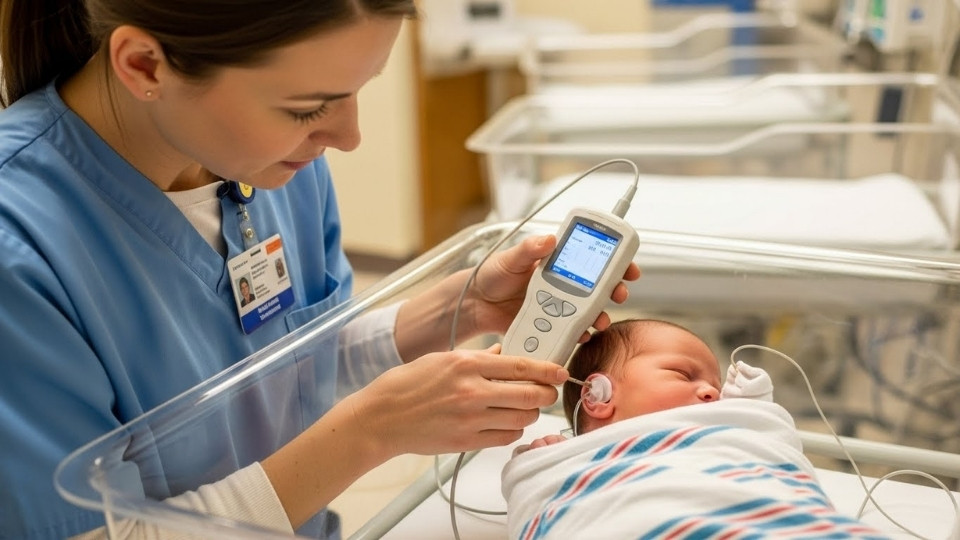
Did your baby receive a “Refer” result on their newborn hearing screening, and now you can’t stop worrying? If so, take a breath. A “Refer” on a newborn hearing screening is far more common than most parents realize, and in the majority of cases, it does not mean hearing loss. It simply means the screening device needs more information.
This guide is designed to help parents move from panic to clarity. We’ll explain why newborn hearing tests are intentionally sensitive, the most common temporary reasons babies don’t pass, how follow-up works in Texas, and exactly what steps you can take next without losing sleep.
What a Newborn Hearing Screening Actually Measures
A newborn hearing screening is a quick, noninvasive check performed in the hospital or shortly after discharge. It does not diagnose hearing loss. Instead, it answers one simple question:
Is sound reaching the inner ear and auditory nerve well enough right now?
Two technologies are most commonly used:
OAE Test (Otoacoustic Emissions)
The OAE test measures tiny sound waves produced by the inner ear in response to clicking sounds. These otoacoustic emissions are detected by a small probe placed in the ear canal.
AABR Screening (Automated Auditory Brainstem Response)
An AABR screening measures how the hearing nerve and brainstem respond to sound. This automated auditory brainstem response test uses soft sensors placed on the baby’s head.
Why “Refer” Results Are So Common

A hearing Refer result is often caused by conditions that resolve on their own within days or weeks. These are sometimes referred to as false positives or false referral causes, but a more accurate term is temporary interference.
The 5 Most Common Innocent Reasons for a Refer
1. Vernix in the Ear Canal
Vernix caseosa, the creamy substance that protects babies in the womb, often remains in the ear canal after birth. Vernix hearing screening interference is one of the most common reasons for a failed test.
2. Trapped Amniotic or Middle Ear Fluid
Fluid from birth can remain behind the eardrum, causing transient hearing loss or temporary conductive hearing loss in newborns.
3. Environmental Noise
Hospital units, especially NICUs, are noisy. Environmental noise screening interference can easily disrupt sensitive OAE and AABR measurements.
4. Baby Movement During the Test
Sucking, stretching, or crying can interfere with readings. Baby movement during OAE testing is a frequent cause of a false fail.
5. Small or Curved Ear Canals
Many newborns have small ear canals, which makes ear probe placement difficult and affects test accuracy.
A “Refer” Is Not a Diagnosis

It’s important to understand the difference between screening vs diagnostic testing.
- A screening is a pass or refer check
- A diagnostic hearing test is a detailed medical evaluation
A Refer simply means: “Let’s take another look.”
This distinction is critical for reducing emotional stress after a Refer result.
The 1-3-6 Rule in Texas Explained

Texas follows the nationally recommended 1-3-6 rule for hearing:
- Screen by 1 month
- Diagnose by 3 months
- Early intervention by 6 months
This timeline is part of TEHDI Texas (Texas Early Hearing Detection and Intervention), overseen by Texas DSHS hearing programs.
Most babies who Refer initially will pass the outpatient rescreen, usually scheduled within a 2-week rescreen window after discharge.
What Happens at a Newborn Rescreen

A newborn rescreen or outpatient hearing rescreen is typically done in a quiet clinic setting rather than a busy hospital nursery.
What Parents Can Expect
- A calm, dim room
- Careful ear inspection for ear canal debris
- Repeating OAE or AABR tests
- Results explained immediately
Many Dallas and Plano families schedule these at a Dallas hearing clinic or with a Plano audiologist or newborn specialist experienced in infant testing.
How to Prepare Your Baby for a Rescreen

Preparing properly can dramatically improve results.
Practical Tips That Help
- Sleep stripping newborn: keep your baby awake before the appointment so they sleep during testing
- Strategic feeding test timing: feed right before or during setup
- Dress your baby in easy-off clothing
- Bring a pacifier if allowed
- Ask for a quiet test environment
Questions Parents Should Ask

Questions for Your Pediatrician
- Was the Refer unilateral or bilateral?
- Was the screening OAE, AABR, or both?
- When should the rescreen be scheduled?
Questions for the Audiologist
- Do you specialize in newborn audiology?
- Will this be a screening or diagnostic test?
- What are the next steps if the results are still unclear?
You can also ask about Texas insurance hearing screen coverage, including Medicaid newborn hearing benefits and TEHDI resources.
Screening vs Diagnostic Testing: A Clear Difference
A diagnostic evaluation may include ABR waveform analysis, middle ear evaluation, and frequency-specific testing.
What to Monitor at Home While You Wait

Parents can watch for infant hearing loss signs, though the absence of signs does not rule anything out.
Sound Awareness Checklist
- Startles at loud noises
- Turns toward sound
- Responds to name by 6–9 months
- Babbling increases over time
Tracking speech milestones in baby development helps support parent empowerment, not anxiety.
If Hearing Loss Is Confirmed

Early detection matters. When identified early, options may include:
- Hearing aids
- Cochlear implant evaluation
- Speech therapy for infants
- Pediatric ENT consultation
Early language development support dramatically improves outcomes.
A Calm, Proactive Action Plan

Here’s the simple roadmap:
- Remember, a refer is common and often temporary
- Schedule the post-discharge rescreen promptly
- Prepare your baby for a quiet test
- Ask informed questions
- Monitor development at home
- Follow up without delay if needed
This approach transforms a false alarm hearing screen into proactive newborn care.
Bringing It All Together
A newborn hearing test Refer result can feel overwhelming, but knowledge is powerful. Most referrals are caused by common newborn ear conditions that resolve naturally. Understanding the process, timelines, and next steps allows parents to move forward calmly and confidently.
If your baby needs follow-up testing, working with experienced pediatric providers ensures clarity, reassurance, and timely care.

Need help navigating a newborn hearing screening or rescreen in Dallas or Plano? The pediatric specialists at Pediatric Associates of Dallas work closely with families to coordinate hearing follow-ups and ensure babies receive the care they need at the right time.