





Have you noticed your child doesn’t quite respond to their name the way other toddlers seem to, or that they line up their toys the same way every single time? Many Dallas parents notice small things like this long before anyone uses the word autism, and then spend weeks Googling at midnight trying to figure out if what they’re seeing is normal or something worth mentioning at the next appointment.
The good news is that you don’t have to figure this out alone, and you don’t need a medical degree to know what to watch for. Autism spectrum disorder has recognizable patterns, and pediatricians organize these patterns into a few clear categories. Understanding those categories and the ages they typically show up can help you know what you’re seeing and when it’s worth bringing up.
Social Communication and Interaction Signs

This is usually the category parents notice first, because it shows up in the small back-and-forth moments of everyday life. Pediatricians look at these signs alongside a child’s age, since a behavior that’s expected at 9 months looks different than the same behavior at 24 months.
Some of the earlier signs to watch for include:
- Avoiding eye contact or not keeping eye contact during everyday interactions
- Not responding to their name by 9 months
- Not showing facial expressions such as happy, sad, angry, or surprised by 9 months
- Not playing simple interactive games like pat-a-cake by 12 months
- Using few or no gestures, such as waving goodbye, by 12 months
As children get a little older, other signs tend to become more noticeable:
- Not sharing interests with others by 15 months
- Not pointing to show a parent something interesting by 18 months
- Not noticing when others are hurt or upset by 24 months
- Not noticing other children and joining them in play by 36 months
- Not engaging in pretend play by 48 months
- Not singing, dancing, or performing for a parent by 60 months
None of these signs on their own means much. Every child develops on their own timeline, and a single missed milestone is usually not cause for alarm. What matters more is a pattern across several of these areas, especially when it persists past the age when most children have moved past it.
Restricted or Repetitive Behaviors and Interests
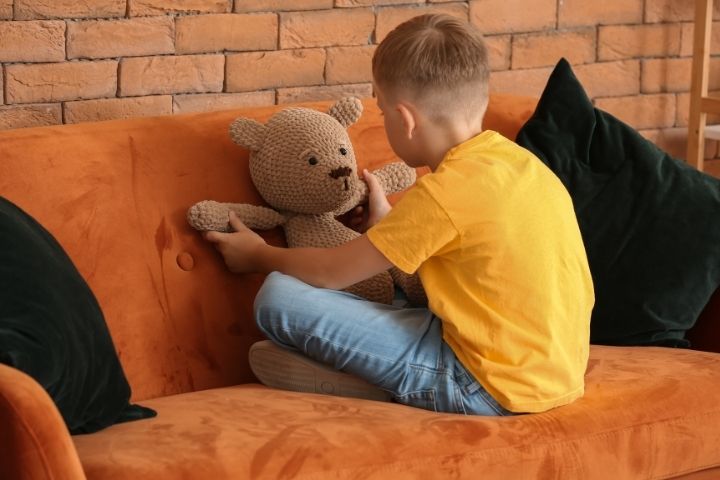
The second major category involves behaviors that repeat, or interests that become very narrow or intense. These are often the signs that stand out most to parents because they can look different from anything siblings or friends’ children have done.
Common examples include:
- Lining up toys or objects and becoming upset when the order is changed
- Repeating words or phrases over and over, sometimes called echolalia
- Playing with toys the same way every time
- Focusing intently on parts of an object, such as the wheels on a toy car, rather than the whole toy
- Becoming upset by minor changes in routine
- Having intense or unusually narrow interests
- Needing to follow specific routines
- Hand flapping, body rocking, or spinning in circles
- Unusual reactions to how things sound, smell, taste, look, or feel
Again, context matters here. Many toddlers go through phases of liking order or repeating favorite phrases. What pediatricians are watching for is whether these behaviors are frequent, intense, and paired with signs from the social communication category above.
Related Characteristics That Often Come Along With Autism

Some children on the autism spectrum also show characteristics that aren’t diagnostic by themselves but often appear alongside the signs above. Knowing these can help fill in the picture, even though none of them confirm anything on their own.
These can include:
- Delayed language, movement, or learning skills
- Hyperactive or inattentive behavior
- Unusual eating and sleeping habits
- Gastrointestinal issues, including constipation
- Unusual mood or emotional reactions
- Anxiety
- Either a lack of fear or more fear than expected for a situation
If your child shows several of these alongside the social and behavioral signs mentioned earlier, it’s worth mentioning all of them together at your next visit rather than treating each one as a separate, smaller concern.
Regression: When a Child Loses Skills They Once Had

One pattern that catches many Dallas parents off guard is regression. About 25 percent of children later diagnosed with autism develop some language and then gradually, or sometimes suddenly, stop using it. This most often happens between 15 and 24 months. Alongside the loss of words, some children also become more socially withdrawn during this same window.
This can be one of the more unsettling things for a parent to witness, especially if your child was previously saying words or making eye contact and then seems to pull back. If this happens, it’s worth bringing up right away rather than waiting to see if it resolves on its own.
No Single Sign Confirms Autism
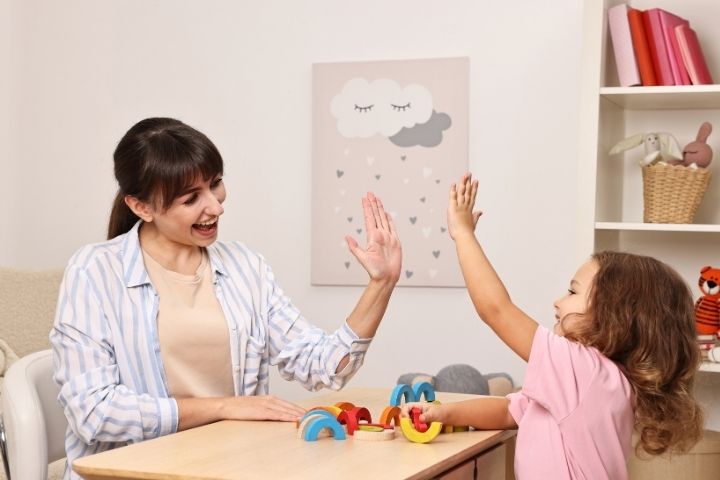
It’s worth saying plainly: no single behavior on this list means your child has autism, and a formal diagnosis is never made from a list like this one. Some children with autism won’t show every sign here, and some children without autism will show a few of them at different points in development. Autism is identified through a proper evaluation, not a checklist a parent fills out at home.
That said, noticing patterns matters. If several of these signs show up together and persist, that’s useful information to bring to your pediatrician, not something to diagnose yourself.
When These Concerns Are Typically Raised in Dallas

The American Academy of Pediatrics recommends that all children be screened for autism at both the 18-month and 24-month well-child visits, in addition to ongoing developmental surveillance at every checkup in between. At Pediatric Associates of Dallas, parents are asked to complete the M-CHAT-R screening tool before these two visits.
A positive M-CHAT-R result doesn’t mean your child has autism. It means further evaluation is recommended, which is exactly the point of the screening. Catching potential concerns early gives families more time to pursue evaluation and, if needed, intervention, without waiting for a problem to become more obvious over time.
Why Hearing Is Part of the Picture

One thing that often surprises parents is that hearing gets checked when there are concerns about speech, social response, or a child not turning toward their name. That’s because hearing loss can produce some of the same signs as autism, particularly around language delay and not responding when called.
Ruling out hearing issues is a standard part of sorting through these concerns, which is one reason Pediatric Associates of Dallas offers in-house audiology alongside pediatric primary care. Having both under one roof means a hearing concern can be checked without an extra referral, slowing things down.
The Takeaway
If you’ve made it this far because something about your own child’s development has been nagging at you, trust that instinct enough to bring it up. You don’t need certainty, and you don’t need to match every item on this list. You just need to describe what you’re actually seeing.
Knowing which signs to watch for and which well-child visits are built around checking for them gives you a clear next step instead of another few weeks of searching online. Starting intervention as early as possible can make a meaningful difference for many children on the spectrum, and that starts with a conversation, not a diagnosis you make on your own.
If you have questions about your child’s development, social skills, or hearing, the team at Pediatric Associates of Dallas can help you sort through what you’re seeing and figure out the right next step for your family.